The Surfer’s Journal is proudly reader-supported since 1992. We rely on membership rather than advertising to remain commercially quiet. Become a member below and gain access to every article ever published along with many other TSJ member-only benefits.
Create a free account to access three complimentary articles, or become a member to unlock all editorial and become a supporter of independent surf journalism.
Subscribers to The Surfer’s Journal get access to all our online content as well as the TSJ archive. Become a member to unlock all editorial and become a supporter of independent surf journalism.
Dylan Graves on isolated surf cultures, weird wave criteria, and his motivation to keep searching.
By Whitman Bedwell
Interview
Light / Dark
Born in Melbourne, Florida, in 1986, Dylan Graves moved with his family to Isabela, Puerto Rico, the following year. His parents both surfed, and they exposed Graves and his older brother, Josie, to what was on offer—both in the water and on land—around their new home island and in the wider Caribbean, the latter often by sail. Graves took naturally to both riding waves and the thrill of chasing them.
Through his teens, he stacked accolades as a contest surfer, including a national title. He also turned heads out of a jersey, wintering in Hawaii, hopping aboard the Indies Trader with Kelly Slater, pushing the limits at rock-fronted slabs back home. After turning professional, he made his name as a traveling freesurfer, filling his passport while threading tubes, cracking lips, and punting end sections at surfing’s A-plus venues. Magazine covers and movie parts followed.
A few years ago, he refined his focus. Instead of pursuing the perfect, he set his sights on the novel: unconventional waves in unconventional locations. Think glacier-induced rollers in Alaska, wind-whipped peaks on Lake Superior, tidal bores rumbling down the Amazon River. On and on, to the tune of a web series titled Weird Waves With Dylan Graves. Through a blend of humor, ingenuity, open-mindedness, and a touch of healthy caution, each episode functions as a video travelogue, documenting not just waves ridden but also the people and places resetting the boundaries on what constitutes “surf culture” at large.
He’s kept the general program rolling on his own channels since. Standing rapids on the Snake River in Wyoming. Tidal rapids in Canada. Ferry wakes in Brisbane. A wave pool on an island in the Persian Gulf. Whatever, wherever, whenever, however—so long as moving water can be ridden at speed on some type of craft. Toss in additional trips to conventional spots for more traditional scores, as well as the odd hurricane swell in Puerto Rico, and it seems that Graves is on a never-ending chase to maximize the good hours in every day.
I caught up with him recently by phone to try to find out for sure. Graves was in Tweed Heads, New South Wales, where he’s now based. It was a Tuesday morning, six o’clock sharp.
Graves had already been up for some time, busy running down leads, scanning charts, eyeing forecasts, and weighing the logistics of actually getting on the ground. To where, exactly? Well, he wasn’t quite sure. But, as he would soon explain, that’s precisely the point.
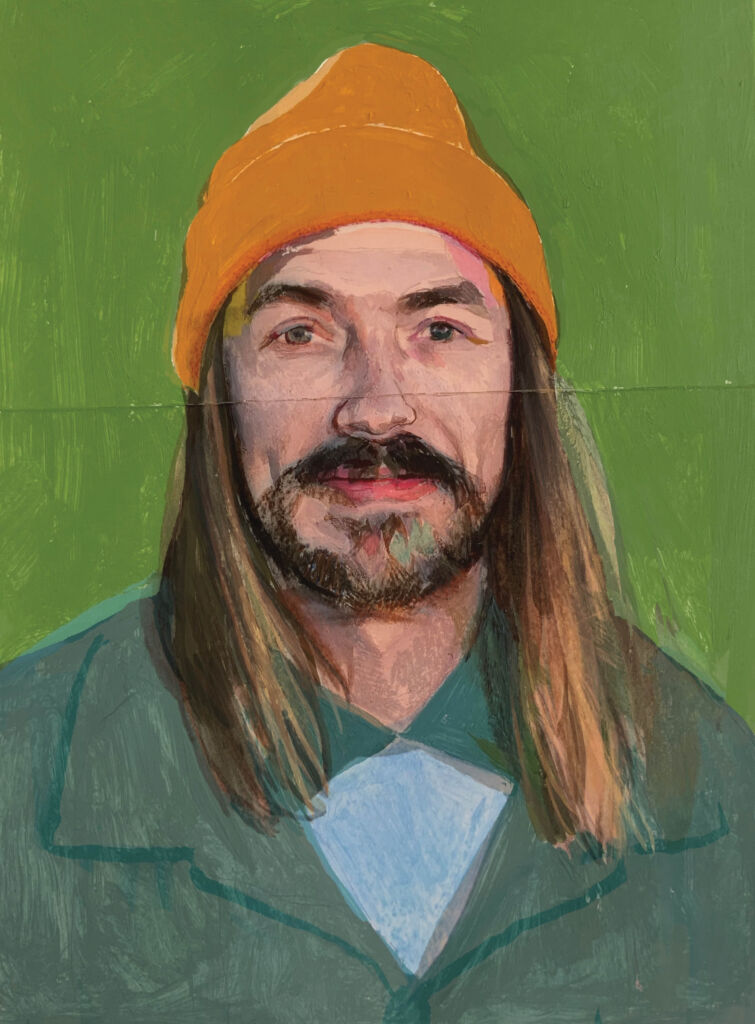
Illustration by Andrea Ventura
WB You spent much of your life enjoying some of the “best” waves on the planet. Where did the pursuit of “weird” waves come from?
DG It sort of snowballed from going on trips to get those good waves. When you’re chasing a swell, occasionally you’ll get great waves the whole trip. But most of the time, there’s a lot of down days. So, I’d be in these new places with time on my hands, and I’d start hearing about all these other waves nearby, including novelties. With perfect waves, people can be secretive, which I totally understand. But with novelty waves, it’s almost like they want to share them and have other people check them out. It just became an easy way to connect with people in these places I was going to, which then opened up the full experience of wherever that was. I got kind of obsessed with seeking that out, as opposed to just trying to get barreled every single day of my life.
WB You seem to still get barreled quite a fair amount.
DG Oh, I’ll hang around for swells all the time and surf where I know I’m going to score. And it’s hard to turn down a boat trip to Indo. But “weird waves,” or whatever you want to call them, provides a balance in mindset. It almost forces you to appreciate what’s in front of you. When you let go of whatever expectations you have, even riding tiny tanker waves on a soft top feels surprising and fresh.
WB Was there anywhere that felt especially surprising in that way?
DG They all feel pretty magic when I’m there. I guess I’ll always have a soft spot for the tidal bore on the River Severn in England, which was a trip we did pretty early on. We were in the middle of the countryside, where there should not be waves at all. We were staying at a house on the river, and the night before, it was so calm and tranquil. I remember saying, “I can’t believe we’re here to go surfing.” Obviously, I’d done my research. I knew it was the first river wave ever surfed and was where Steve King set the world record for the longest wave ever ridden. I’d watched all the videos. But being there on the ground and looking at the river, the environment—coming from what I’d known surfing to be for most of my life, it just didn’t compute. Then, the next day, I watched the wave come down the river out of nowhere, and my mind was just blown. It still trips me out.
WB The English countryside is a long way from the Caribbean.
DG It’s funny, though, because when I look back on it, growing up in Puerto Rico and traveling around the Caribbean kind of set me up for the path I’m on now. As a kid, I got to explore so many different ways of living, foods, and languages in what’s a pretty small area. Like, totally distinct cultures on islands that are so close, you can swim between some of them.
We’d sacrifice full swells to go and check out if our theories were right. We got it wrong a ton. That can fry you—especially when you hear that it was pumping at home. But when we were right, it was magic.
WB And that’s not to mention the waves. While the Caribbean obviously has its known spots, there’s a lot of other setups hidden away—though some are notoriously tricky to solve, right?
DG Well, the islands in the Caribbean are all pretty small and all unique, so each swell kind of does something different. I’ve gone to waves where I’ve scored, and then the next swell, the charts looked the exact same, but I showed up and the wave wasn’t there. Or there’s certain spots that are super tide and wind dependent, and a wave can appear and disappear within an hour.
WB Sounds like it can be very novelty-like.
DG Definitely. I feel like it gave me a degree in forecasting and planning. As teenagers, my friends and I would come up with our own theories on mythical waves we’d heard about or setups we came across on the map. We’d sacrifice full swells to go and check out if our theories were right. We got it wrong a ton. That can fry you—especially when you hear that it was pumping at home. But when we were right, it was magic. I’m really doing the same thing today, I guess, just with a bigger map and a broader idea of what “scoring” means.
WB Many of the places you go are, obviously, way outside of surfing’s trampled path. What’s the process look like for dropping a pin, getting to it, and then actually riding a wave there?
DG So, either I’ll have an idea of somewhere I want to go and I’ll do research and try to get in touch with somebody in that area, or someone will reach out about a wave. I kind of let the ones that get me most excited float to the top and make them priorities. I’ll slowly accumulate as much info as possible, stay in touch with people, and then it’s just a waiting game for the right swell or tide or set of conditions. In those ways, it’s just like planning a trip to get normal waves. With unique waves, the biggest difference for me has been the storytelling aspect.
WB It’s interesting, because with what you’re doing, the actual surfing is really just a small part of the whole experience.
DG I’ve gone on so many trips throughout my life, and most of them either boil down to a few photos or short clips—just straight surf action, maybe a little scenery and a couple funny moments. And don’t get me wrong, I love watching that stuff too. I grew up on it. But compared to what was actually happening on the trips, it felt like just the tip of the iceberg. I’d get home and my family or friends would ask me how it was, and I’d always be like, “Well, how much time do you have? All this crazy stuff happened.” I think that stuff is way more fascinating than a turn I did, you know?
WB In some of the more remote locations or with some of the weirder waves, it looks like it sometimes gets pretty dicey.
DG It can, for sure. The way I think about it is there’s the physical challenges and then the mental challenges. With the physical, for example, take tidal bores: While they aren’t very big, height-wise, they feel like really big waves in terms of how much water is moving and how fast it’s moving in a tight space. In order to document them, along with shooting from jet skis, the filmers and photographers have to get set up in different sections along the bank for the wave we’re riding, which is at the front of the incoming tide push, and they have to get out of there before it washes the bank out. You only have a few minutes, max, and there can be these weird wedges and backwashes that hit out of nowhere. You’re really playing the margins. There’s also all sorts of stuff in a river, like logs or boulders or whatever, that you really don’t want to run into or get your leash snagged on.
WB What’s the closest it’s come?
DG When we went to the Pororoca tidal bore on the Amazon River—the largest river in the world by water discharge, by the way—we had a really sketchy scenario where the ski went to pick up one of the filmers off the bank, and a rogue side wave popped up, flipped the ski, and washed it and the camera gear into the trees, which are the last place you want to be on a riverbank with a tidal bore coming in. Luckily, everyone was fine, and we got out before something really bad happened.
WB It’s not like it’s a quick drive to a hospital, either. You’re in the middle of the jungle.
DG Exactly. There’s so many factors that go into riding some of these waves that I never even considered until I was faced with them up close. But I’ve realized that the novelty stuff helps me ride conventional waves better, dealing with water that’s behaving in unexpected ways and learning to adjust to that behavior.
WB You mentioned a mental aspect, too. Anything specific come to mind?
DG One of the trips we did was to surf the shorebreak wedge at Kelingking Beach on Nusa Penida Island in Indo. To get down to the beach requires hiking down a really steep cliff for a vertical mile. The trail is looked after, and there’s always a ton of people going up and down—the beach is world-renowned, since the headland looks like a T. rex from above. So the hike is doable, obviously. But I’m not great with heights. And there was a moment where I was going down and there was a lot of traffic coming up, and I was hanging onto this flimsy wooden barrier with one hand, surfboard in the other, looking off the edge of the cliff, absolutely freaking out.
WB Facing primal fear…
DG Yeah! All I could think about was, “If someone slips and pushes me, or if this little piece of wood breaks, I’m gone.” It reminded me of getting caught by a set when the waves are outside of your comfort zone, and you have to tell yourself, like, “All right, I’m here, this is what I’m doing,” and then you breathe through it. And I did that and was able to keep my cool. It probably only lasted 30 seconds, but it felt like an hour. And kind of like surfing bigger waves, it’s one of those tests where, in the moment, it’s scary and you don’t want to be there. But afterward, once you’ve made it, you’re like, “Whoa, that was cool.”
WB All these waves in all these places later, what keeps you after it?
DG I feel like there’s so many different things in surfing that are yet to be explored. I think as surfers we’ve been looking at all the same things for way too long. Like, sure, certain places are more crowded than ever. But that just means you have to look a little harder. And in terms of what surfing can be and what it means to different people, that’s changing a bit, so it’s a really cool time to be doing it. For me, I know that being a pro surfer is one of the luckiest things anyone can be. I’m lucky I’ve gotten to do it for so long. There’s no words to describe some of the experiences I’ve been fortunate enough to have because of surfing. But I’ve always known that I might not be a pro surfer forever. So while I have these opportunities, I want to see as many places as I can and ride as many waves as I can and meet as many people as I can and embrace as much of the world as I can.
WB Where’s next?
DG Like I said, I have a really long list. I could spend the rest of the day running you through it. I spend a lot of time chasing down leads and trying to line stuff up for different trips at different stages until it’s time to press go. But hey, it might be somewhere I’ve never even considered—maybe never even heard of—that just falls into place. I’m never totally sure until it happens. That’s what keeps it interesting.
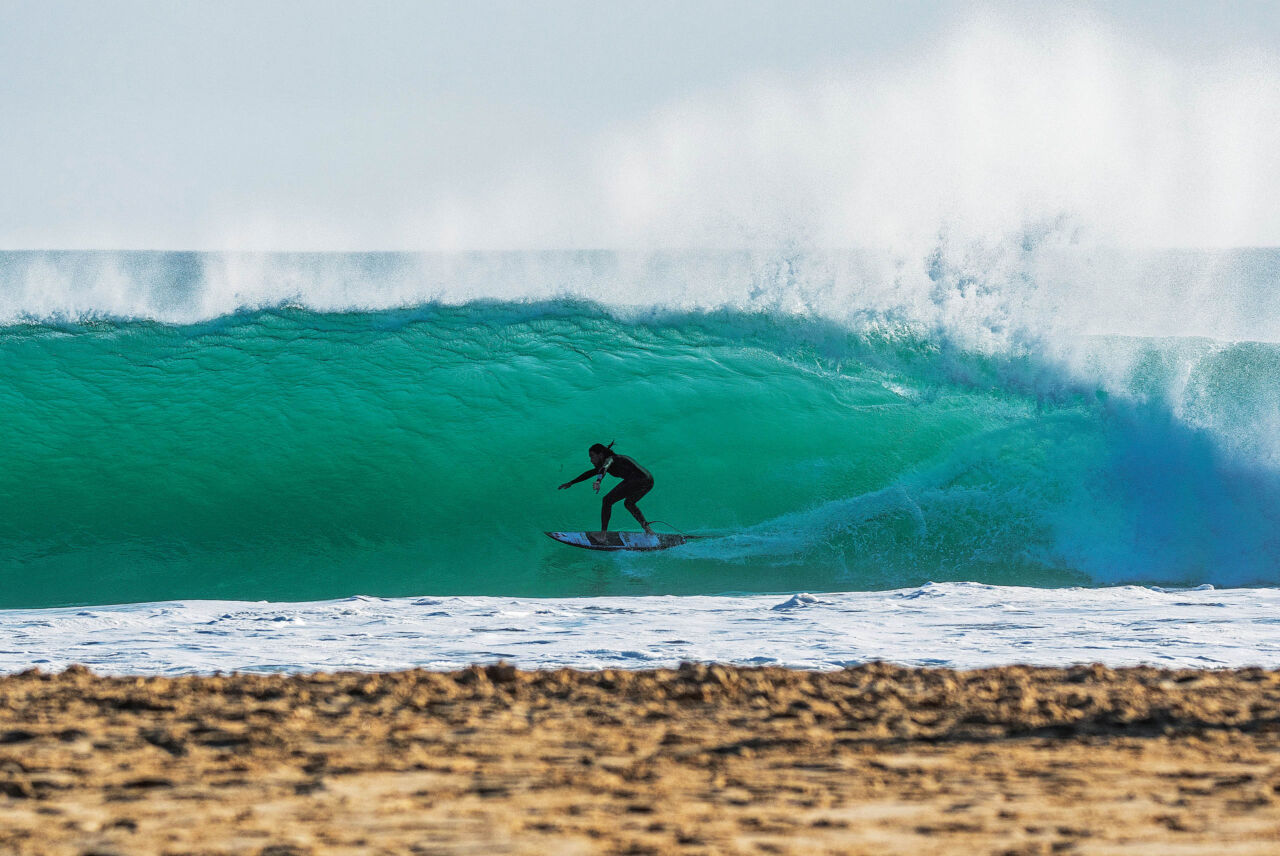
[Feature image: A little bit of oddity, with perfection as payoff. Graves navigates the bounce while hitting the throttle for the speedrun ahead, location undisclosed. Photo by Claudio Cabral.]
Premium Membership
From $179.00
Become a premium member of reader-supported, independent journalism. Our premium members advance the work of The Surfer’s Journal. Enrollment at this level includes:
Bi-monthly delivery of The Surfer’s Journal
Custom Annual Gift
Listed as a TSJ premium member on surfersjournal.com
25% off merchandise and apparel in the TSJ store
Unlimited access to every article we’ve ever published