

Victor Emilio Estrada spent two years, from 1946 to 1948, building the majestic Humboldt Hotel on the beachfront near a small Ecuadorian fishing village, General Villamil Playas. When it opened in 1949, the hotel boasted 60 rooms, two “honeymoon apartments,” a saltwater pool, a grand ballroom, and a soon-to-be famous bakery. Victor’s father, Emilio Estrada, had been the President of Ecuador and the family lived in the city of Guayaquil. Victor was a big city banker, but fell in love with the small fishing village, so he built a church, an airfield, a country club with a golf course, and a casino. He then trucked in drinking water to help the town grow and added a military training academy.
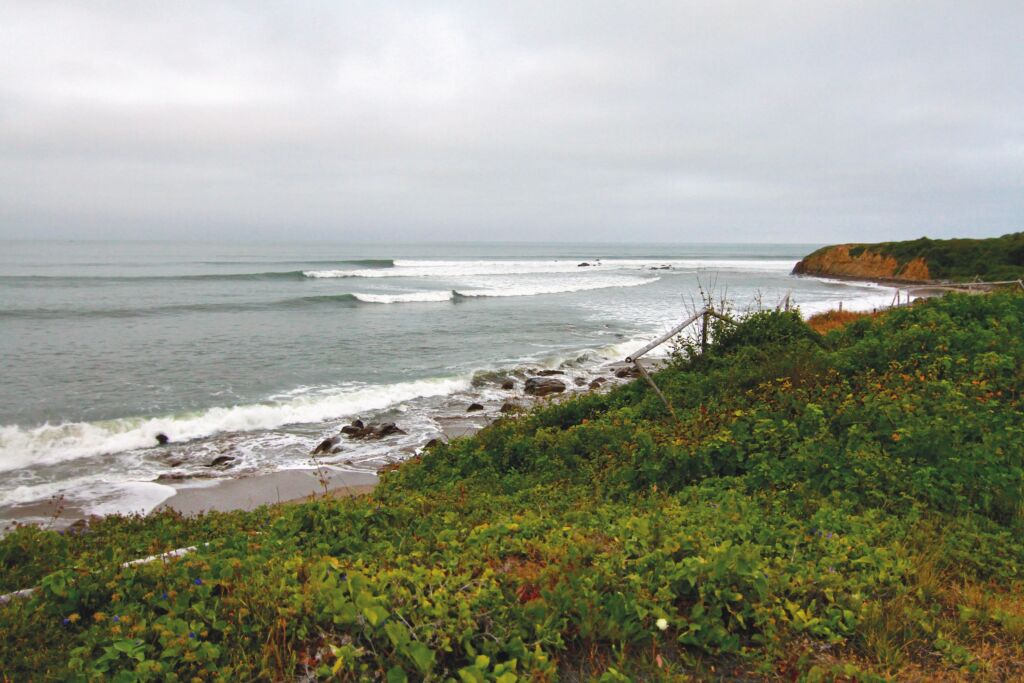
Victor’s eldest daughter, Chabela, and his son-in-law, Alfonso, soon began to manage the hotel. Alfonso eventually purchased several miles of coastline next door to the property where they and their relatives began building weekend homes to escape the city life of Guayaquil. By chance, that land also hosts five long, right-handed pointbreaks that, on the rare day with a huge southern hemi swell, can be ridden for over a mile.
Many of the rich and famous Ecuadorians were pilots in those days, flying in from Guayaquil on the weekends and landing at the airfield. They enjoyed imported orchestras, fine dining, and formal dancing at the Humboldt, which also attracted many international celebrities, as well as traveling surfers, for decades, until its demolition in the early 1990s.
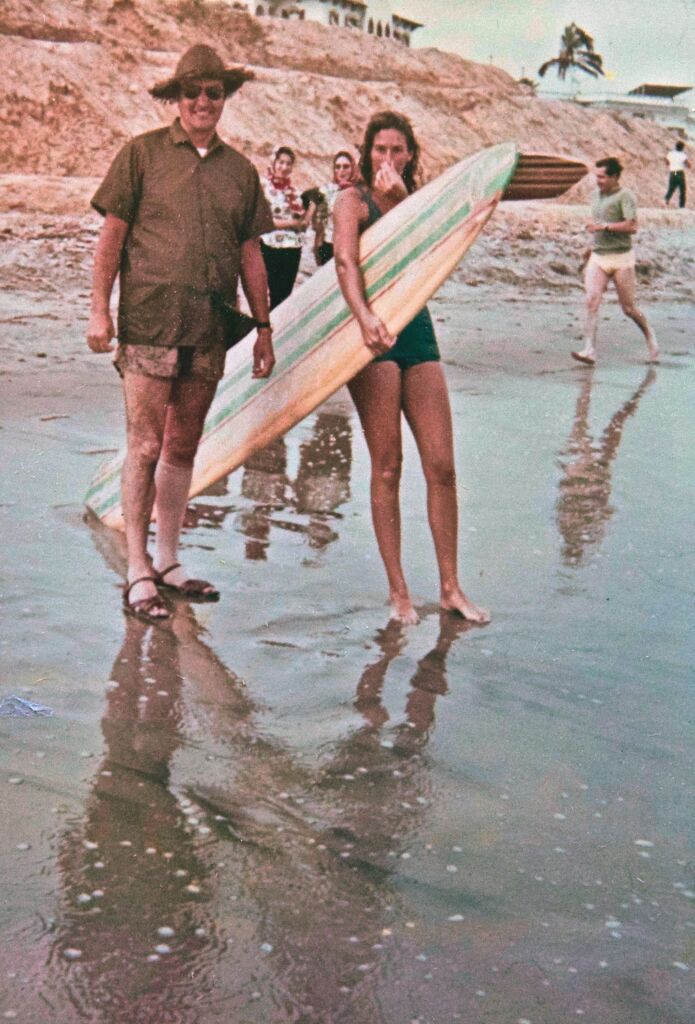
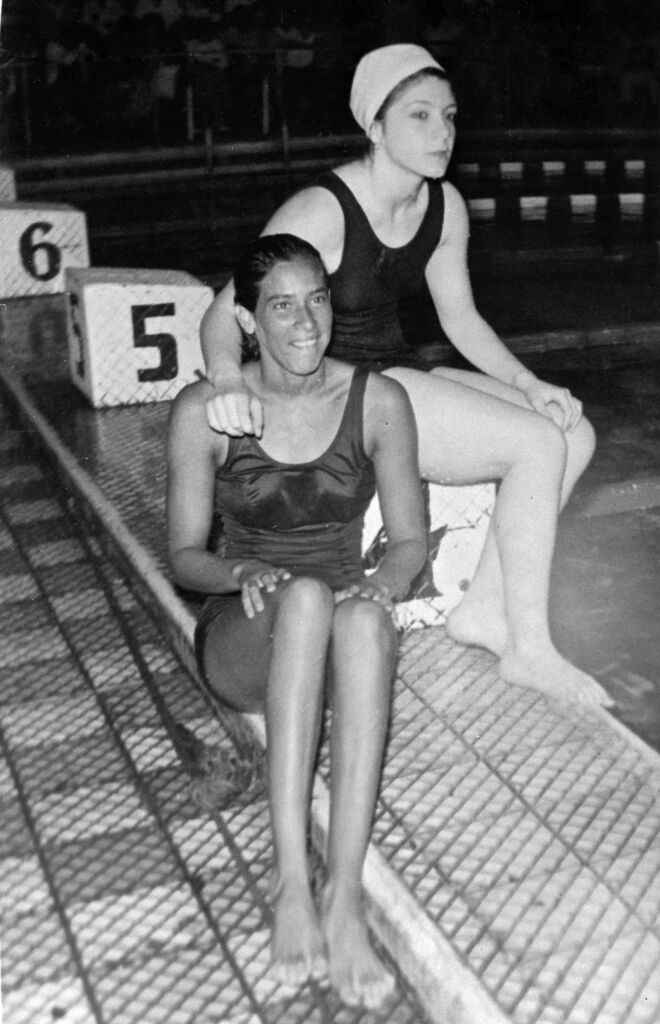
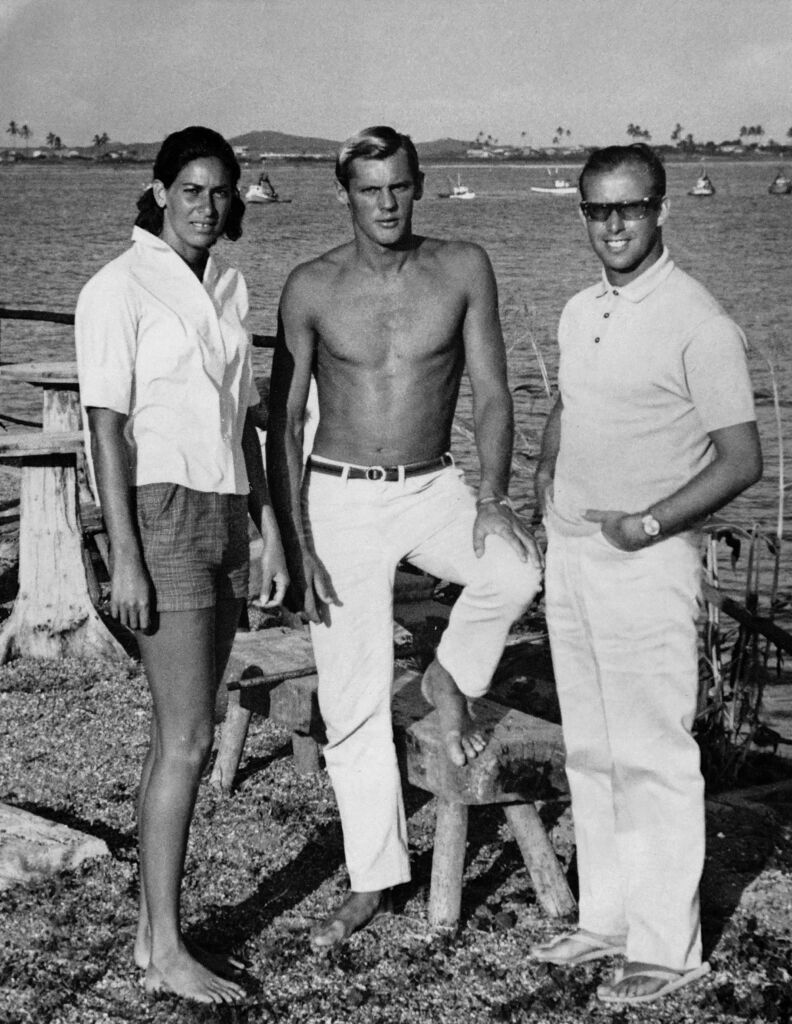
Dorothy, the second of their five children, was born in 1940 and spent her weekends bodysurfing and belly boarding on narrow scraps of balsa, “aqua planos,” that washed down the rivers from the sawmills. One day in 1962, when Dorothy was 22, she looked out of her bedroom window and saw a guy surfing the long wave in front of her house. He was one of the first Peruvian surfers, Piti Block, and he was riding a Hobie. She had never seen a surfboard, or even a photograph of a surfer before, so she swam out and talked Piti into letting her try the board.
Soon, Piti was dating Dorothy’s cousin and was persuaded to leave his board at Dorothy’s house as an excuse to come back and visit. Dorothy had been the Ecuadorian backstroke swimming champion in 1960 and, at 6-feet, possesed the perfect swimmer’s build. She had become accustomed to spending up to three hours a day training in one of the two saltwater pools her mother, Chabela, had built in front of the house.
Her father, Alfonso, would frequently drive her to Guayaquil for competitions, but he had a fatal heart attack just months before she met Piti. Deeply affected by her father’s passing, Dorothy stopped competitive swimming and put all of her obsessive training-energy into surfing. During the workweek, Dorothy spent most of her days riding Piti’s board in front of her house, but on the weekends her older brothers and Piti’s local friends would take the board away from her and take turns learning to surf.
Dorothy decided she needed her own board but, at that time, foam wasn’t yet available in Ecuador. Dorothy drove to Guayaquil and purchased balsa planks instead, which were cheap and plentiful. Next to her mother’s house was carpenter’s shop and Dorothy started working with the hand tools that were available. Over the next few years, she glued up, shaped, and glassed more than 15 balsa boards that she then rode and sold to friends. She and her brother, Jorge, experimented with keel-fins made from scraps of wood. Later Dorothy made foiled-glass fins that looked a bit like early Greenoughs.
Lanky and graceful, she learned to longboard quickly and, in early 1964, Piti Block arranged for her to be invited to the Peruvian International Surfing Championships, hosted by the famous Waikiki Club. She flew to Peru with her brother and bullfighter/surfer Gustavo Plaza as official representatives of Ecuador.
All of the Ecuadorians rode balsas while the other competitors had more modern foam boards. In her heat, it was foggy and Dorothy couldn’t see the beach or the waves and was a bit scared at first. The water was cold, the surf large, and she was unused to the break, but she managed to take 2nd place behind Pilar Merino, the legendary Peruvian champion.
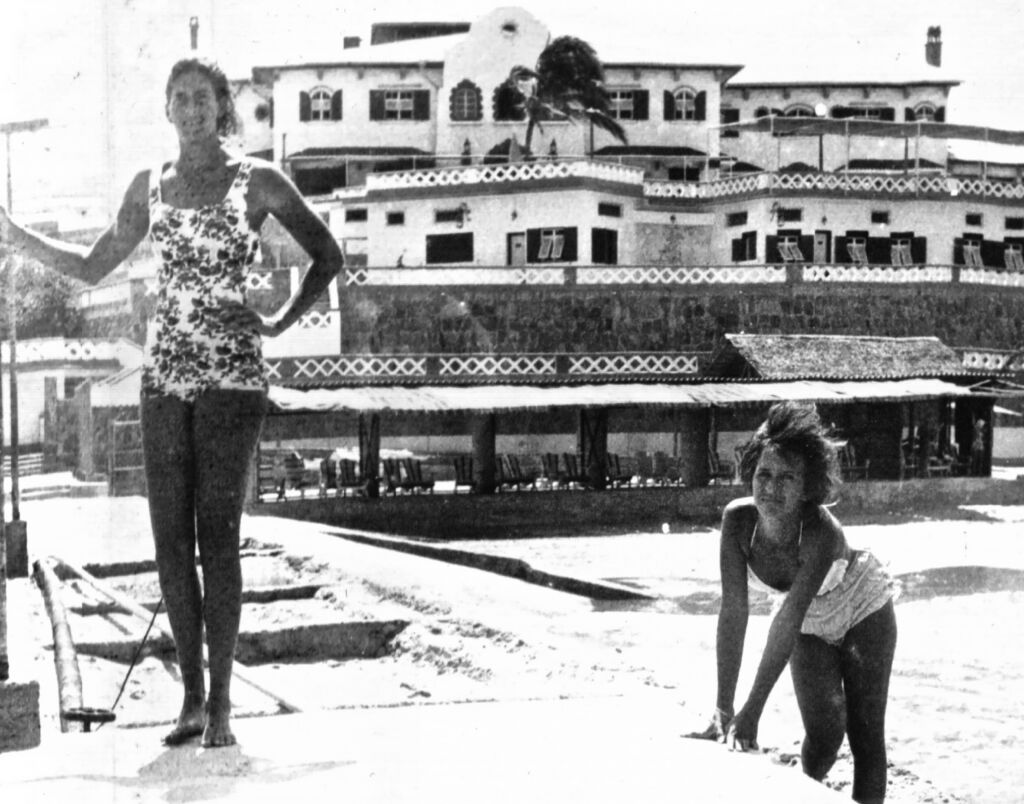
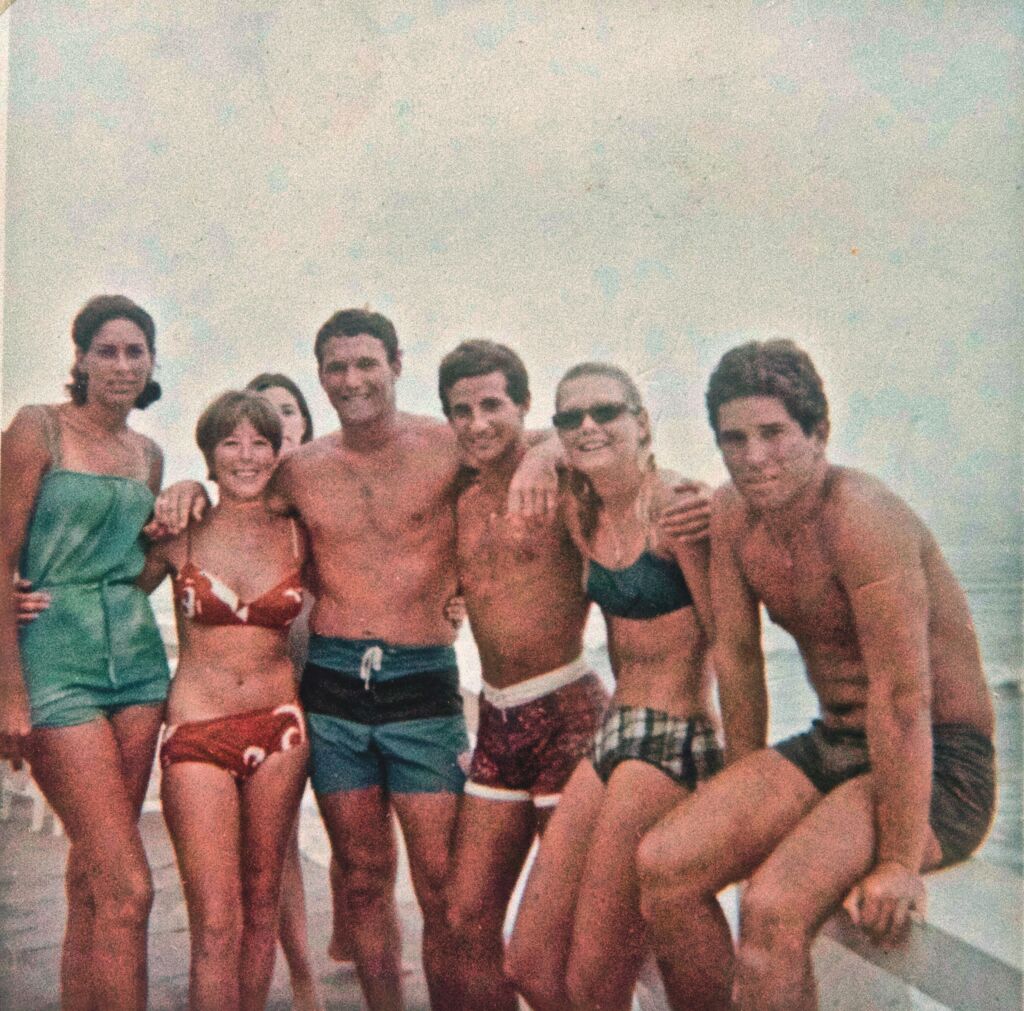
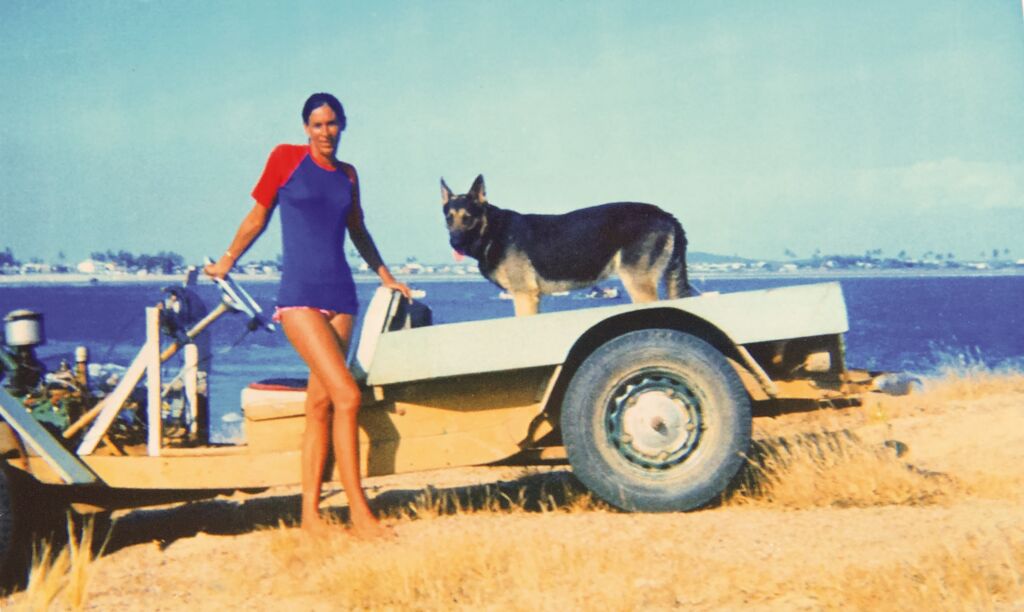
Jurado and the Humboldt served as the hub for a heavy rotation—and an admittedly contrasting mix—of surf wanderers and high society socialites. Beach scene, with friend, 1960.
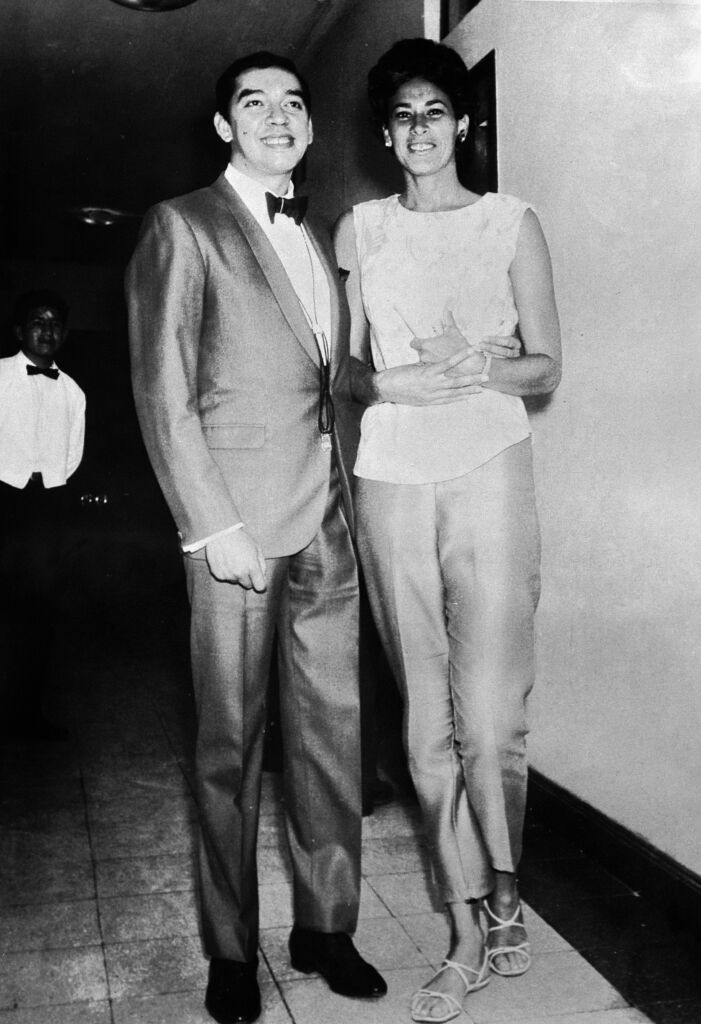
Fred Hemmings, Phil Edwards, and Peruvian Hector Velarde, were also in the contest and placed 1st, 2nd, and 3rd in the Men’s Overall event. After the contest, Piti took Dorothy and brother Jorge to surf Punta Roca, which had just recently been “discovered.”
“After winning the Makaha International,” Fred Hemmings recalls, “I was invited by the Peruvians to represent Hawaii in the Peruvian International Surfing Championships. The contest was held at Kon Tiki, in the village of Punta Hermosa south of Lima. Kon Tiki, besides being the name of the break in the middle of the bay, is also the name of Club Waikiki’s members’ compound of weekend homes. The 1964 contest was actually three competitions. The big wave event at Kon Tiki and the “outside” and “inside” break competitions in front of Club Waikiki made up the three events to determine the “grand” champion. The top Peruvian surfers at the time were Hector Velarde, Carlos Velarde, Miguel Plaza, Pollo Arati, Rafael Navarro, Poncho Aramburu, Piti Block, and Joaquin “Shigi” Miro Quesada. In 1964, Felipe was in Hawaii. No one surfed Punta Roca at the Southern point of the bay. Eduardo Arena was the grand innovator and leader of the World Contests. The following year, the World contest was in Peru and they decided to hold the event at the newly ‘discovered’ spot Punta Roca. That was the year I met Dorothy. She was an excellent surfer from Ecuador, probably better than the men. She was Ecuador’s premier and pioneer surfer from the 60s. She’s a gracious and understated lady.”
Dorothy competed again in Peru the next year where she met Phil Edwards, Joey Cabell, Nat Young, Joyce Hoff man, Felipe Pomar, Ken Adler, Mike Doyle, and Miguel Plaza. “An interesting sidelight on the Peruvian contest was a contestant from Ecuador,” said Phil Edwards in a Surfer magazine interview in late 1965. “She was a 6-foot woman [Dorothy Jurado] who was comparable to our best women surfers in California.”
Soon after the contest Nat, Mike, and Ken visited Dorothy and stayed in her mother’s beach house, “Chabela,” which was only 100 yards from The Humboldt Hotel.
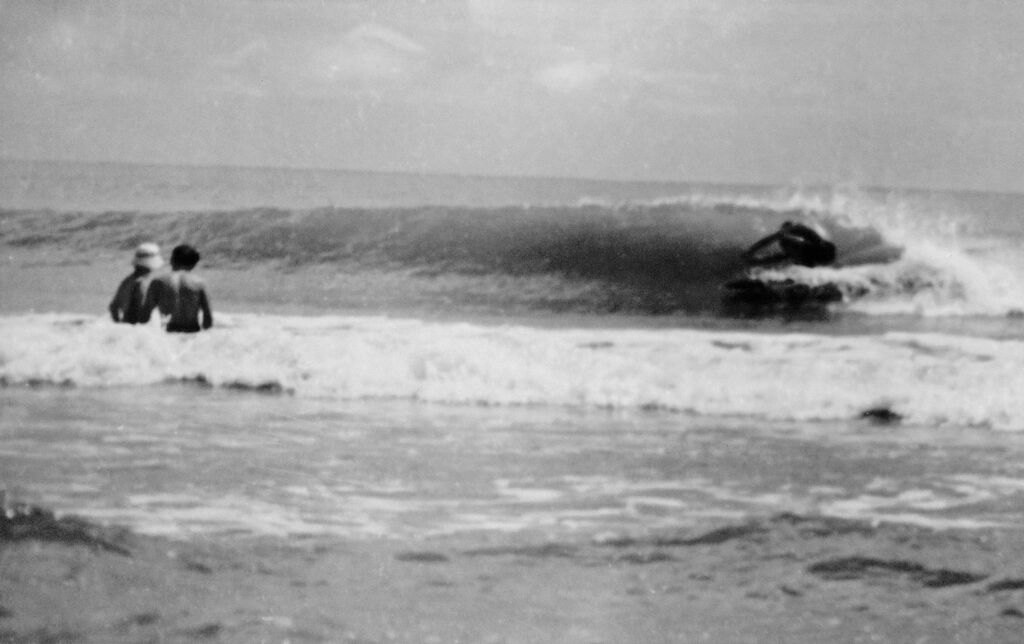
“We met Dorothy at the second World Championships in Lima,” says Mike Doyle, “while we were hanging around the Club Waikiki in Miraflores. Tall, dark-skinned, very exotic. She reminded me of an Indian princess. Dorothy was extremely friendly and asked Nat and I to stop by her home in Ecuador. Bob Evans, the Australian photographer, came along with another Australian surfer, Ken Adler. The Endless Summer had just come out and we were all keen to explore more of the surfing world. We thought it was going to be a big ’ol South American ranch with 100 maids, like muy rico. In reality it was better than that from our standpoint. It was a big sprawling rancho, lots of property and a simple, large ranch house. Wide-open and very natural. Kind of an arid climate, where the house was, with the ocean about a quarter mile away. This is how natural and close to the earth they lived. Deer walked into the house like pet dogs and the swimming pool was full of a million lobsters. Her brother was a commercial fisherman and he kept the extras in the pool. Almost no surfers around at that time. Nat and I rode the beachbreak in front of the house, off shore wind every day, and 3- to 4-foot peelers. The area was totally unexplored and there was no road to get to the points we could see from the house. We borrowed a car and drove north and found a couple of good places, but we didn’t have a clue where we were. I had Dorothy’s welder sharpen a car spring and weld handles onto it to make a drawknife and shaped her a Balsa board while we were there. We glued up the blank with car inner-tube strips for clamps. We knew there was plenty of surf somewhere around there but we had no maps and the couple of locals were happy just to surf in front of the house.”
“We had sold our boards in Peru,” Ken Adler recalls. “We started playing with Dorothy’s boards—no fins, a real challenge, and had fun on these strange shapes. Wax melting straight off, me in a dark room with extreme sun exposure. Fifteen course meals. Her uncle’s plane landing on the beach in front of the house. Being picked up in a limo at Quito.”
In Peru, Dorothy saw early issues of John Severson’s new Surfer magazine, so whenever a friend would travel to the U.S., she would ask them to bring back new mags so she could study them. Her uncle, Lucho, who was also a pilot/surfer, and who had shaped a few balsas for himself, showed up one day with a 16mm copy of The Endless Summer and they screened the film in Dorothy’s living room.
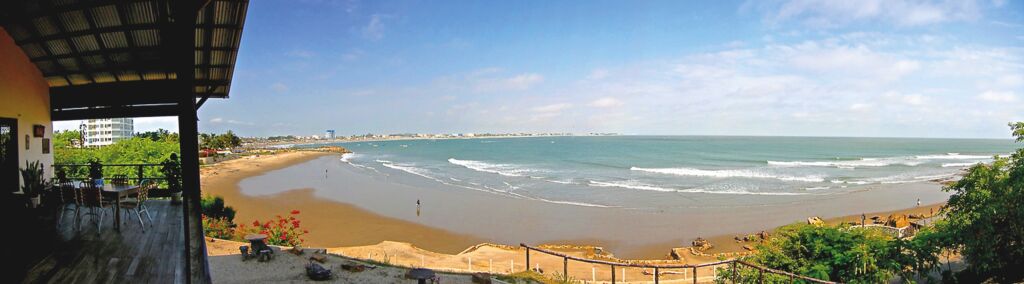
One day, Dorothy’s older brother, Alfonso Jr., flew to Playas in an unfamiliar plane that he had borrowed from their cousin. A very bold pilot, he started to perform aerial stunts but had a small engine problem, which led him to belly flop into the ocean in front of their house. Dorothy and her friends frantically paddled their boards out to the plane to save him, only to find him calmly sitting on the Piper’s wing, patiently waiting to be rescued. Asked why he just didn’t swim in, he replied that he didn’t want to ruin his gold Rolex.
Later, Alfonso, who liked to hunt on an off shore island, persuaded his friends to tag along. Unfortunately his new plane was only a two-seater, so he would line it up on the local runway, have his friends lie on the wings, where they’d hold onto the leading edge. Then he’d carefully takeoff and fly very low over the water the 15 miles to the island. They’d hunt, pack all the guns and carcasses into the plane, and then climb back onto the wings for the return flight.
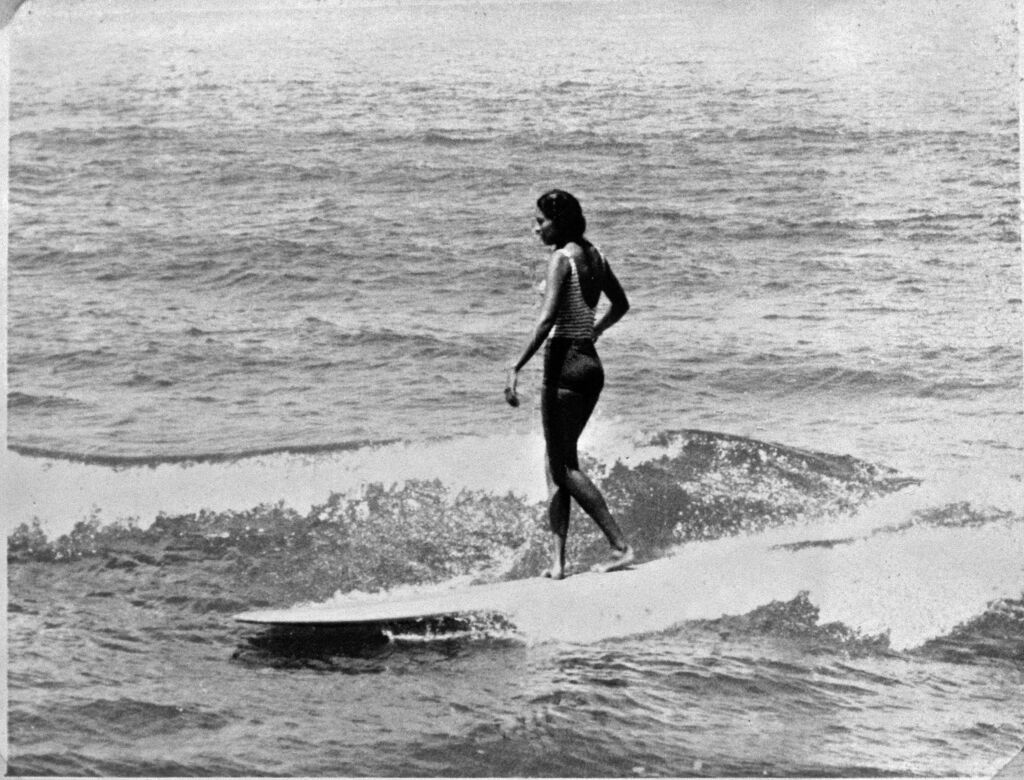
The Humboldt Hotel in Playas, one of their three family-owned Humboldt Hotels, was one of the finest in South America at the time and Dorothy became the volunteer lifeguard. Once, on a very large day, she saved a family of seven by making multiple trips on her homemade balsa board. In March 1965, the iconic Aussie world traveler, Peter Troy, visited and stayed long enough for Dorothy to begin copying his style, along with her favorites: Nat Young, Mike Doyle, and Phil Edwards.
Dorothy remembers Peter as being “muy guapo” and a bit shy. He surfed a few times in front of her house and someone waded out into the water with a camera to get a shot of him stylishly cross-stepping. Dorothy carefully examined each traveling surfer’s board, so she could improve her balsa-shaping abilities and she still surfed almost daily. Dorothy and her siblings drove between their private pointbreaks in a highly-modified 1938 Ford truck, which is now rusting comfortably in a field near her house. Later in 1965, surfer Mark Martinson, accompanied by the filmmaking team of Greg MacGillivray and Jim Freeman, showed up at the Humboldt while working on their first coproduction, Free and Easy.
After her husband’s passing, Dorothy’s mother decided to build a weekend-only restaurant on the beach in front of her home to feed friends and as a hangout for surfers. It was called “Chabela’s” and was decorated with turtle shells, fine wood furnishings, and the jaws of a huge shark. All five kids worked at the restaurant from an early age. Later, Dorothy would sponsor local contests in front of the restaurant and help judge the events, drawing on her international competitive experience. She even sponsored an Ecuadorian surfer to travel overseas to compete.
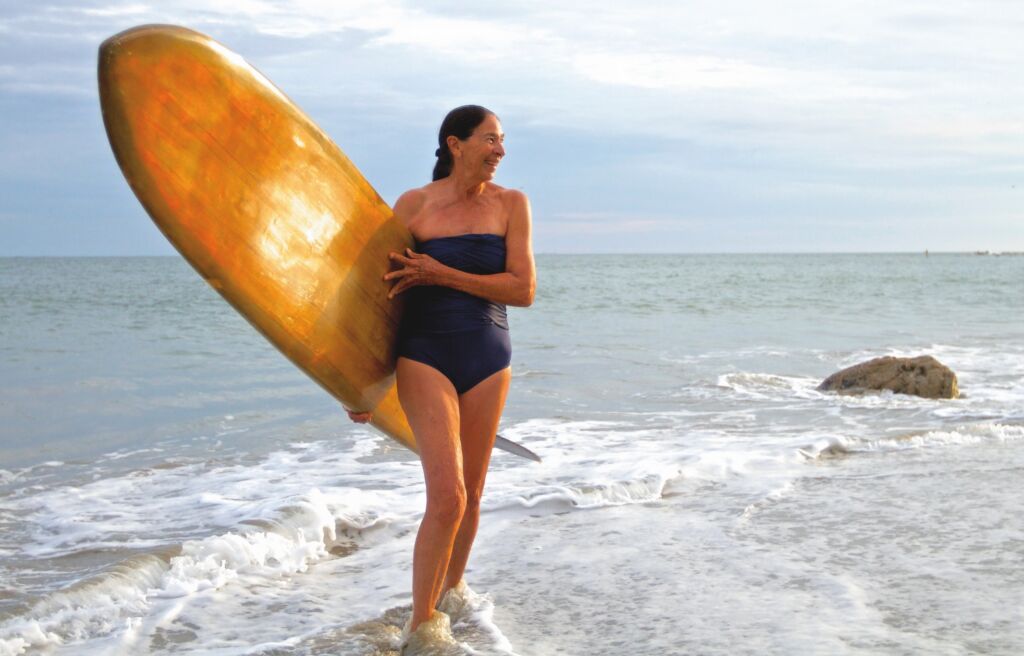
Dorothy spent so much time surfing that she eventually contracted sun blindness and couldn’t see for three days afterward. Her doctor advised her that she had serious retina damage and to wear a hat, sunglasses, and long sleeved blouses and pants from then on in the water. She tried it for a while but all that clothing didn’t work well in the tropics and she eventually quit surfing. Dorothy now has two adult sons, who also surf, and she still lives on the beach in “Chabela House.”
Her extended family numbers in the hundreds and, on most Fridays, they leave Guayaquil and make the one-hour trek to their large family beachfront homes. About 90 percent of the kids and adults in the tribe surf, bodyboard, or SUP in front of the houses every weekend. It’s a continuous party atmosphere, through which Dorothy strolls and visits, accompanied by her retired shrimp-boat skipper husband, “Loco,” who is 83 years old. On Saturday afternoons, she and her younger sister, Silvia, who was Miss Ecuador in 1974, host a beach party, featuring local ceviche along with their favorite (and quite lethal) cocktail, called “The Molokai.” Supposedly imported from Hawaii, it tastes like it contains several kinds of rum, amaretto, and other secret components, one of which may be aviation fuel.
This all takes place on the beach between their string of oceanfront houses and the site of the old Humboldt Hotel. It’s an eclectic mix of family, friends, visiting surfers, and the occasional international diplomat—all barefoot under the palapas on the bamboo furniture. Stories flow, drinks get spilled, and the surfing lifestyle goes on, Ecuadorian style. In the center of the action is Dorothy, all smiles and aloha spirit, going on 73 years of age but, just under the surface, still that young lady who swam out to meet Piti Block back in 1962. One minute she’ll be dancing with a young nephew, the next telling stories to a crowd of children. You can see the happiness on her face, and the love she bestows on her countless friends. She is the glue that holds the whole tribe together, and the person who brought the surfing lifestyle to her country.
[Feature image: Just off the doorstep, Dorothy Jurado knee-drifts in sight of her grandfather’s Humboldt Hotel, Ecuador, early 1960s]